
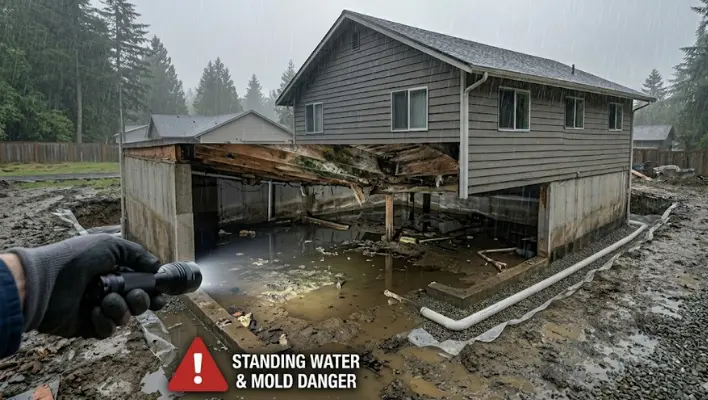
If you have standing water in your crawl space, it usually means there is a drainage problem, poor grading around your home, plumbing leaks, or excess groundwater pressure pushing moisture inside. The fix depends on the source, but in most cases it involves a combination of water removal, sealing entry points, improving drainage, and installing a long-term moisture control system like a sump pump or crawl space encapsulation.
Here’s the important part most homeowners miss. Standing water is not just a “wet area” problem. It slowly damages your home’s structure, increases humidity in your living space, and creates the perfect environment for mold, wood rot, and pests.
Quick Answer: What Should You Do First?
If you see standing water in your crawl space:
First, remove the water and identify where it is coming from.
Then, fix the source, whether it is surface water, groundwater, or plumbing leaks.
After that, install a long-term drainage and moisture control system to prevent it from coming back.
If you skip the last step, the problem almost always returns.
Why Standing Water in a Crawl Space Is a Serious Issue
Standing water directly affects:
Indoor air quality through humidity and vapor movement
Structural integrity of floor joists and support beams
Energy efficiency because insulation becomes ineffective
Pest activity since moisture attracts termites and rodents
Over time, even a small amount of water can weaken wooden structures and spread mold into unseen areas.
Building science research also shows that moisture in crawl spaces moves upward into the home through natural air pressure differences, often called the stack effect.
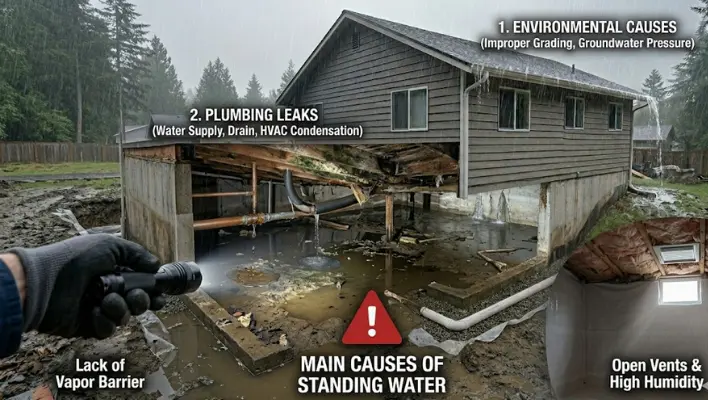
Main Causes of Standing Water in Crawl Space
Poor Drainage Around the Home
One of the most common issues is improper grading. If the soil around your home slopes toward the foundation instead of away from it, rainwater naturally collects near the crawl space.
Blocked or missing gutters also make this worse by dumping water directly beside the foundation.
Groundwater Pressure
In many areas, especially regions with heavy rainfall, groundwater rises and pushes moisture through the soil. This is often called hydrostatic pressure.
When this happens, water seeps through foundation walls or enters through floor cracks.
Plumbing Leaks
A leaking pipe under the house can slowly create standing water without being noticed for weeks.
Common sources include:
Water supply lines
Drain pipes
HVAC condensation lines
Even a small leak can create a persistent moisture pocket.
Open Vents and High Humidity
Traditional vented crawl spaces often allow humid air inside. When that air cools, condensation forms and collects as water.
This design is one of the reasons modern building experts recommend sealed systems instead.
Lack of Vapor Barrier
Bare soil continuously releases moisture into the crawl space. Without a vapor barrier, this moisture accumulates and contributes to water pooling and high humidity.
This is where better SEO content wins. Not by repeating fixes, but by organizing them logically for real decision making.
How to Fix Standing Water in a Crawl Space
Step 1: Remove the Water Safely
Start by pumping out the water using a submersible pump or wet vacuum system.
If the water is contaminated or smells foul, protective equipment is necessary.
Step 2: Identify the Source
This is the most important step. Without it, water will return.
Check for:
- Exterior drainage problems
- Plumbing leaks
- Cracks in foundation walls
- Groundwater entry points
A professional crawl space inspection is often needed here.
Step 3: Fix Exterior Drainage
Most long-term solutions start outside the home.
Fixes include:
- Extending downspouts away from the foundation
- Regrading soil so it slopes outward
- Clearing clogged gutters
- Installing exterior drainage systems
Step 4: Install Interior Drainage Systems
If water keeps returning, an interior drainage system may be required.
This often includes:
- French drains along crawl space edges
- Sump pump installation for water removal
- Drainage channels directing water to a pump pit
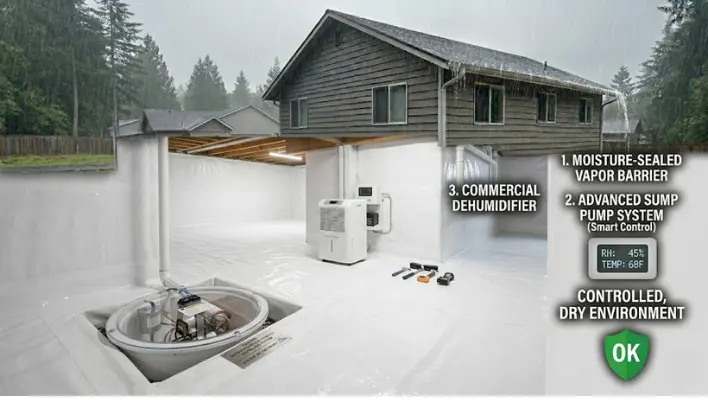
Step 5: Seal and Protect the Crawl Space
This is where long-term solutions begin.
A proper system includes:
- Vapor barrier installation
- Air sealing foundation gaps
- Moisture-resistant insulation
- Crawl space dehumidifier
This approach is commonly called crawl space encapsulation.
Crawl Space Encapsulation and Long-Term Protection
Encapsulation turns a damp crawl space into a controlled environment.
Companies like crawlpros and other regional contractors often recommend this because it reduces:
- Moisture levels
- Mold growth
- Musty odors
- Structural damage risk
It also improves overall indoor air quality by reducing humidity entering the home.
Health and Indoor Air Quality Risks
Standing water is not just a structural issue. It affects the air you breathe.
Common risks include:
- Mold spores are circulating indoors
- Increased allergy symptoms
- Asthma flare-ups
- Persistent musty smell in living areas
This happens because moist air from the crawl space naturally rises into the home through pressure differences.
How to Prevent Standing Water in Crawl Space
Prevention is more effective than repeated repairs.
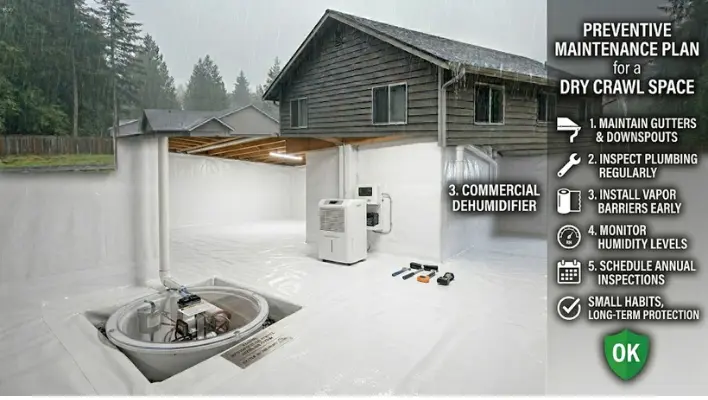
Here’s what actually works long term:
- Maintain gutters and downspouts
- Inspect plumbing regularly
- Install vapor barriers early
- Monitor crawl space humidity levels
- Schedule annual inspections
Small maintenance habits prevent expensive structural repairs later.
Final Thoughts
Standing water in a crawl space is rarely a surface-level problem. It is usually a system failure involving drainage, moisture control, and air movement, all working against your home.
The real solution is not just removing water. It is fixing why water is getting in and controlling the environment so it cannot return.
If handled early, you can protect your home structure, improve indoor air quality, and avoid costly repairs down the line.