
If your crawl space is affecting indoor air quality, the first step is to control moisture and stop contaminated air from entering your living space. Most crawl space air problems are caused by excess humidity, mold growth, poor insulation, standing water, pest activity, or dirty ductwork. The best solution usually includes a crawl space inspection, moisture control, vapor barrier installation, sealing air leaks, mold removal, and, when necessary, crawl space encapsulation.
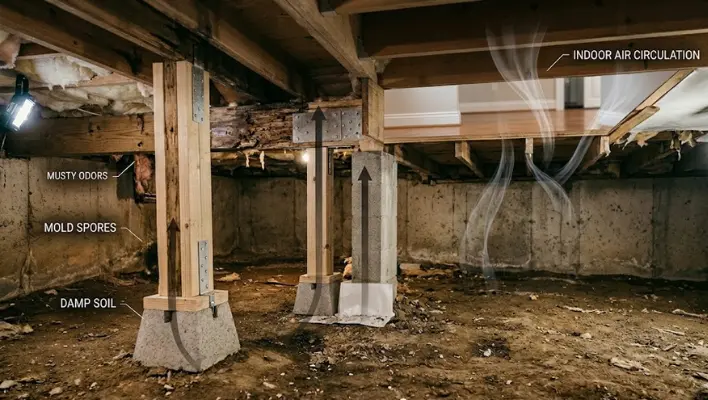
Many homeowners do not realize that the air beneath their home directly impacts the air they breathe every day. Due to something called the stack effect, air naturally rises from the crawl space into the upper areas of the home. That means mold spores, allergens, musty odors, and moisture from below can circulate throughout your indoor environment.
Why Crawl Spaces Have Such a Big Impact on Indoor Air Quality
A crawl space may be out of sight, but it plays a major role in your home’s overall health. Research and building science experts consistently explain that a large percentage of the air inside a home originates from the crawl space area through upward air movement known as the stack effect.
When the crawl space becomes damp or contaminated, those pollutants often travel upward into bedrooms, living rooms, and HVAC systems.
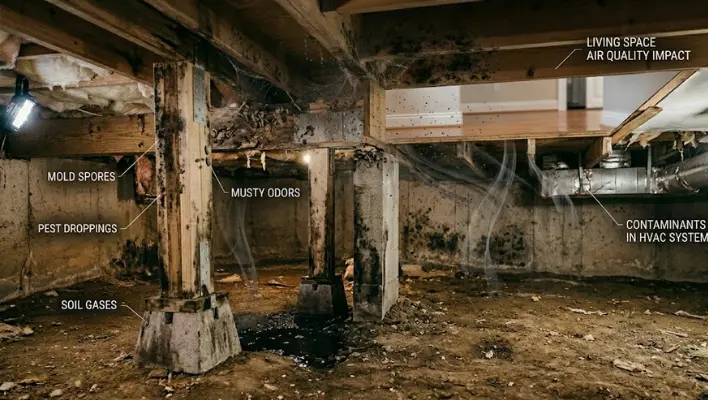
Common crawl space contaminants include:
- Mold spores
- Mildew odors
- Dust mites
- Pollen and allergens
- Pest droppings
- Excess humidity
- Soil gases such as radon
- Bacteria from standing water
Over time, these pollutants can make indoor air feel heavy, musty, or uncomfortable.
Signs Your Crawl Space Is Affecting Indoor Air Quality
Many homeowners ignore early warning signs because the symptoms seem unrelated to the crawl space itself.
Here are some common indicators:
Persistent Musty Smells
A damp earthy odor inside the home often starts below the floorboards. Mold and moisture trapped in the crawl space release odors that rise through the house.
High Indoor Humidity
If your home constantly feels humid even while the air conditioner is running, moisture from the crawl space may be entering the living areas.
Increased Allergy Symptoms
Sneezing, coughing, itchy eyes, asthma flare-ups, and respiratory irritation can become worse when mold spores and allergens circulate indoors.
Mold Growth Inside the Home
Mold on walls, ceilings, or around vents can sometimes originate from moisture problems underneath the home.
Cold Floors and Uneven Temperatures
Poor crawl space insulation and air leakage can affect comfort levels throughout the house.
Pest Problems
Rodents, insects, and termites thrive in damp crawl spaces. Their waste and nesting materials can contaminate indoor air.
What Causes Poor Air Quality in Crawl Spaces?
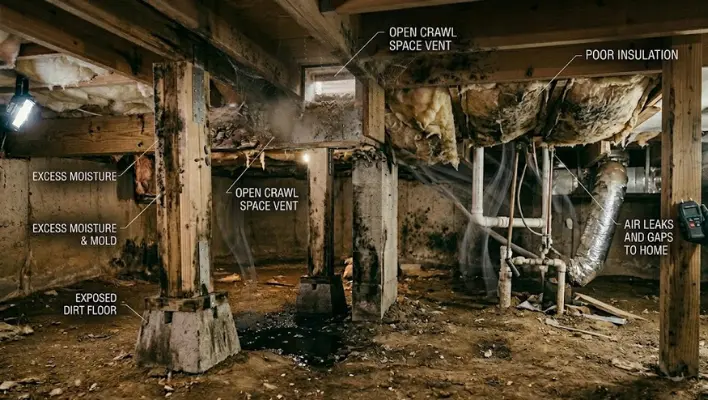
Excess Moisture
Moisture is the biggest problem in most crawl spaces. Water can enter from rain, groundwater, plumbing leaks, or humid outdoor air.
Once humidity levels rise, mold and mildew begin to grow rapidly.
Open Crawl Space Vents
Traditional vented crawl spaces often allow humid air to enter. In many climates, this actually increases condensation and moisture problems rather than solving them.
Exposed Dirt Floors
Bare soil continuously releases moisture into the air. Without a vapor barrier, that moisture spreads throughout the crawl space.
Poor Insulation
Old fiberglass insulation absorbs moisture and can become a breeding ground for mold.
Air Leaks and Gaps
Cracks around plumbing, wiring, and ductwork allow contaminated crawl space air to move into the home.
How to Fix Crawl Space Air Quality Problems
Schedule a Professional Crawl Space Inspection
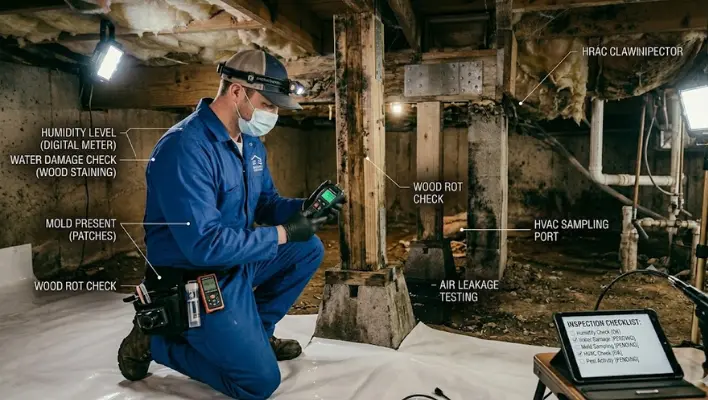
A full inspection helps identify moisture intrusion, mold growth, insulation damage, structural issues, and ventilation problems.
Professionals often check:
- Humidity levels
- Water damage
- Mold presence
- Wood rot
- HVAC contamination
- Air leakage
- Pest activity
Early detection prevents more expensive repairs later.
Install a Vapor Barrier
A vapor barrier covers the crawl space floor and helps stop ground moisture from entering the air.
This is one of the most effective ways to reduce humidity and improve indoor air quality.
High quality vapor barriers are usually made from thick polyethylene material designed for long term moisture protection.
Seal Air Leaks
Air sealing prevents contaminated crawl space air from entering living areas.
This may include sealing:
- Foundation vents
- Floor penetrations
- Duct leaks
- Rim joists
- Access doors
Proper sealing improves both air quality and energy efficiency.
Remove Mold Safely
If mold is present, professional remediation is often necessary.
Simply spraying bleach on mold usually does not solve the root problem because moisture remains behind.
A proper mold remediation process should include:
- Moisture source correction
- Safe mold removal
- Surface cleaning
- Air filtration
- Preventive moisture control
Use a Crawl Space Dehumidifier
Dehumidifiers help maintain healthy humidity levels year round.
Most experts recommend keeping crawl space humidity below 60 percent to reduce mold growth and dust mites.
Consider Crawl Space Encapsulation
Encapsulation is one of the most complete long term solutions for crawl space air quality problems.
The process usually includes:
- Heavy-duty vapor barrier installation
- Air sealing
- Insulation upgrades
- Dehumidification
- Drainage improvements
Encapsulation transforms the crawl space into a controlled environment that stays cleaner and drier.
Many homeowners notice:
- Fresher indoor air
- Reduced allergy symptoms
- Lower humidity
- Fewer odors
- Better energy efficiency
Can Crawl Space Problems Affect Your Health?
Yes. Poor crawl space conditions can contribute to several health concerns, especially for people with allergies, asthma, or respiratory sensitivities.
Possible health effects include:
- Chronic coughing
- Nasal congestion
- Headaches
- Skin irritation
- Breathing difficulties
- Fatigue
- Increased asthma symptoms
Children and older adults are often more sensitive to indoor air pollutants.
How to Prevent Crawl Space Air Quality Problems in the Future
Prevention is always easier than major restoration work.
Here are smart long-term maintenance tips:
Keep Gutters and Downspouts Working Properly
Direct rainwater away from the foundation to reduce moisture intrusion.
Inspect Plumbing Regularly
Small leaks under the home can create major humidity problems over time.
Monitor Humidity Levels
A hygrometer helps track crawl space moisture conditions.
Schedule Annual Crawl Space Inspections
Routine inspections help catch problems early before mold and structural damage spread.
Maintain Proper Drainage Around the Home
Poor grading can push water toward the foundation and into the crawl space.
Is Crawl Space Encapsulation Worth It?
For many homeowners, yes.
If your crawl space has recurring moisture problems, mold growth, poor insulation, or strong odors, encapsulation can dramatically improve indoor air quality and overall home comfort.
It also helps protect:
- Wooden floor systems
- HVAC equipment
- Insulation
- Energy efficiency
- Property value
The long term benefits often outweigh the upfront investment, especially in humid climates.
Final Thoughts
Indoor air quality problems often start where homeowners rarely look. Your crawl space can quietly spread moisture, allergens, mold spores, and odors throughout your entire home.
The good news is that these problems are usually fixable with the right combination of moisture control, air sealing, insulation upgrades, and crawl space encapsulation.
If your home smells musty, feels humid, or triggers allergy symptoms, your crawl space may be the hidden source. Taking action early can improve comfort, protect your property, and create a healthier indoor environment for your family.
FAQs
Can a crawl space make you sick?
Yes. Mold spores, allergens, bacteria, and poor air circulation from a contaminated crawl space can negatively affect indoor air quality and contribute to respiratory symptoms.
How do I know if my crawl space needs encapsulation?
Common signs include musty odors, visible mold, high humidity, cold floors, pest problems, and recurring moisture issues.
Does crawl space encapsulation improve indoor air quality?
Yes. Encapsulation helps reduce moisture, mold spores, allergens, and odors by sealing and controlling the crawl space environment.
What humidity level should a crawl space have?
Most professionals recommend keeping crawl space humidity below 60 percent to help prevent mold growth and moisture damage.